
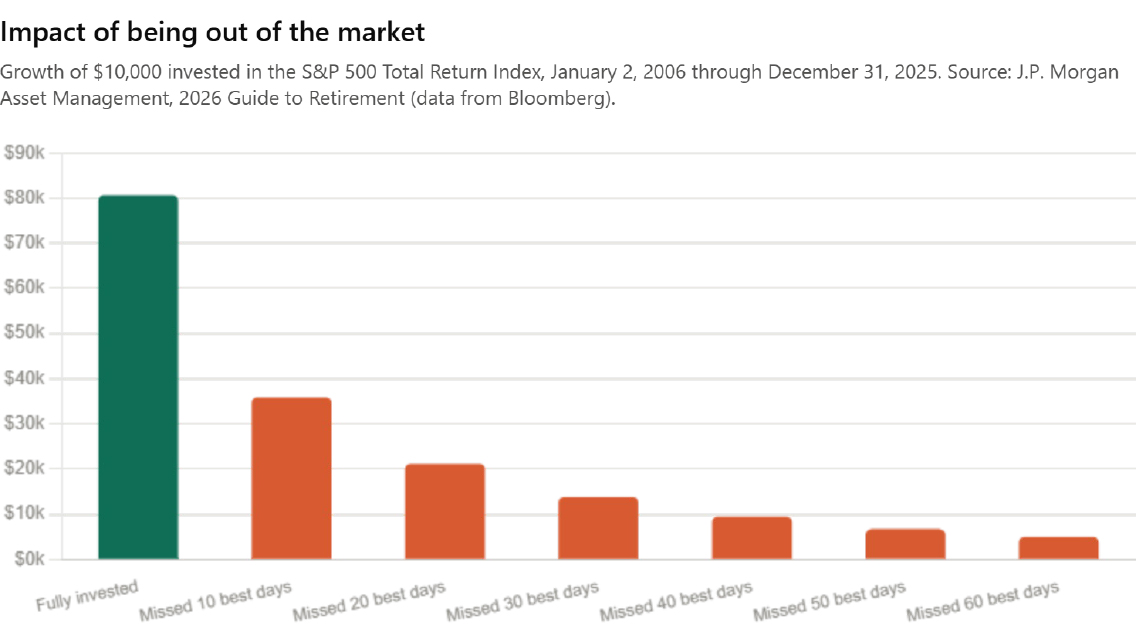
A $10,000 investment in the S&P 500 from 2005 ending in 2025 grew to about $81,000, but only $36,000 for an investor who missed the market’s 10 best trading days. The temptation to bail out during a market drop is human instinct, but it’s one of the costliest mistakes an investor can make. The good news? There’s a better way.
The Downturn Is Normal
Watching your portfolio lose value is a gut-wrenching experience. It’s not just the financial loss that stings; it’s seeing your hard-earned savings seemingly evaporate before your eyes. But market downturns are a normal part of investing. Like the seasons, the economy moves in cycles of growth and contraction, and the market can be volatile in the short term. The dip itself does not cause lasting damage; the reaction does.
The market has proven remarkably resilient. From the Great Depression to the dot-com crash to the 2008 financial crisis, it has weathered severe storms and, time and again, not only recovered but reached new highs. Past examples don’t erase fear in the moment, but they give you context: once you see downturns as a normal part of the cycle and focus on long-term goals rather than short-term swings, you can navigate them with far greater confidence.
What the data actually shows
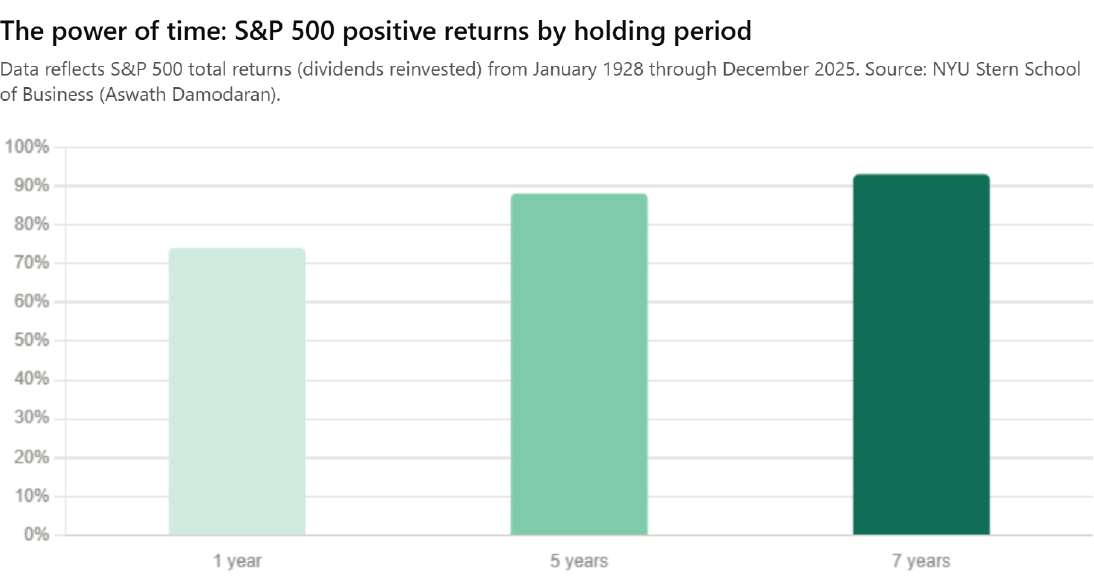
What matters more than any single drop is how things look over time. History shows the S&P 500 has produced positive returns in roughly 75% of individual years, nearly 90% of rolling 5-year periods, and 93% of rolling 7-year periods, based on data going back to the late 1920s. The longer you stay invested, the more the odds move in your favor. Selling during a downturn locks in the loss; staying invested gives the market time to recover, as it has in the past.
Compounding Only Works If You’re Still in the Game
Staying invested matters because the power of investing lies in compounding – your returns generating their own returns over time – and compounding only works if you stay invested. Holding through downturns lets your investments recover and keep growing. Getting out usually means missing the recovery. Markets often rebound just as fast as they fall, and missing just the 10 best days can cut long-term returns roughly in half. Those best days tend to cluster right around the worst ones, so the people who sell to avoid the pain are often the same people who miss the rebound. Getting back in is its own trap: once you’ve sold, deciding when to reinvest can be paralyzing, and many investors wait too long, missing exactly the growth they were trying to protect.
Why this holds at any age
The logic of staying in the market doesn’t change with age — at every stage, reacting to headlines rarely beats staying invested through the cycle. If you’re young or newer to investing, time is your single greatest advantage: every decline is a chance to buy at lower prices and let decades of compounding work, so staying the course matters most of all. If you’re mid-career, you still have a long runway, and interrupting your savings during a downturn only slows the compounding you’re relying on. If you’re near or in retirement, staying invested still matters — pair it with a few years of expenses in cash so short-term drops never dictate your spending. Even when a downturn feels alarming and panic selling seems like the answer, keeping stock exposure is what helps your money outpace inflation.
Strategies for navigating downturns
If selling is not usually the answer, what should you do? Market swings could be an opportunity to rebalance your portfolio to your target allocation by trimming what’s grown overweight and adding to what’s underweight. Keep contributing to your savings. Investing steadily while prices are down means you’re buying at a discount, which works in your favor over time. A sell-off also has its upsides, it can be a good chance to invest in quality assets that have become undervalued.
Conclusion
Understanding the risks of reactive selling, the importance of staying invested, and the strategies to navigate lets investors weather market volatility with greater confidence. For most people, the goal isn’t to beat the market day to day, it’s long-term growth that funds future needs to meet your financial objectives. Staying invested through the ups and downs has historically been the most reliable path forward.
Article by Audrey Searle, Intern at Schaefer Financial Management
Up Next...